
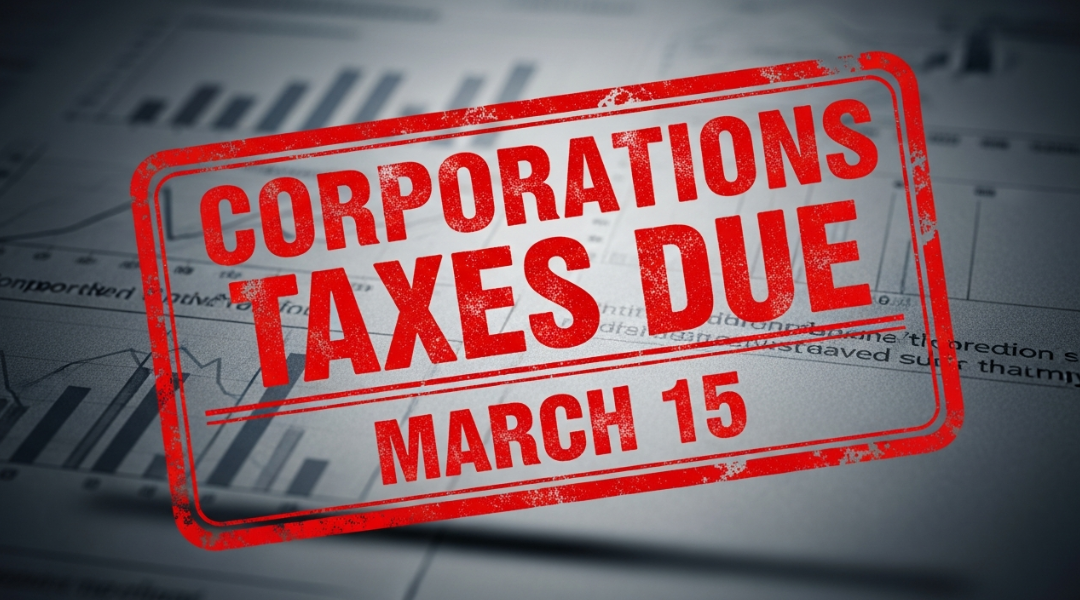
With the tax season coming to a close, Florida business owners should make plans because of important filing dates that may greatly affect their business. The March 15 corporate tax deadline on S corporations and partnerships is rapidly approaching, and one should not fail to comprehend these requirements to keep pace and to avoid expensive fines. As opposed to C corporations, which use the April 15 deadline in the case of calendar-year preparers, pass-through entities utilize an earlier deadline requiring proactive corporate return preparation and full business record prep.
Having a skilled CPA or accounting firm can be vital in ensuring that these deadlines are met and that the intricate demands of federal and state taxation are met. The additional complexity of Florida-specific filing requirements of corporations, partnerships, and LLCs places an extra burden on professionals who will fully address the compliance.
Understanding the Corporate Tax Deadlines for 2026

Tax year 2026 is subject to significant differences in the types of entities and their filing dates. Understanding which bodies must file by March 15, 2026, versus April 15, 2026, is key to effective tax planning. There is a date specifically related to the S corporations and partnerships, which is March 15, whereas C corporations have another schedule that gives more time to prepare.
S Corporations and Partnerships
For S corporations and partnerships, Forms 1120-S and 1065 are due March 15, 2026 (or the next business day, March 17, 2026, if March 15 falls on a weekend). This deadline is non-negotiable for maintaining good standing with the IRS. Additionally, Schedule K-1 must be provided to shareholders or partners by this same date, ensuring that individual tax filers have the necessary information for their personal returns.
If more time is required for corporate return preparation, a company can be granted an automatic six-month extension by filing Form 7004 by March 15. This extension would mean the deadline to produce corporate returns would be September 15, 2026. It is, however, important to note that this is an extension of the filing rather than the payment of the taxes.
Discover Financial Peace of Mind Today
Partner with trusted experts to simplify your finances and grow your business.
C Corporations
C corporations have a different schedule; Form 1120 is due on the 15th day of the fourth month of the tax year. In the case of calendar-year C corporations, this would amount to an April 15 deadline. Another big exception is important, though: C corporations whose fiscal year ends on June 30 require filing by the 15th of September, which is why it is important to know your own federal corporation tax date and Florida corporation filing date.
Corporate Tax Payment Deadlines and Requirements
The difference between the filing and payment dates is one of the most crucial elements of tax compliance that business owners often misinterpret. The extension does not contribute to the duration of tax payment, and all the estimated tax rates FL, and federal have to be paid by the initial date to prevent the penalty and interest.
It is necessary to assess the business income projections during the year to calculate and remit the estimated payments. It is at this point that corporate accountant services would come in handy, with their expertise needed to predict their tax liability and have the schedule of payments under control.
What Is the Due Date for Corporate Tax Payment?
Generally, the due date of payment of taxes coincides with the filing date- March 15 in the case of the S corporations and partnerships, and April 15 in the case of the C corporations. Form 1120-W should be used by businesses to calculate an estimated tax payment FL, and federal liability with C corporations or other related worksheets.
Was the 2026 Tax Deadline Extended?
Current IRS instructions show the 2026 tax due dates as usual, March 15 in case of pass-through entities and April 15 in case of C corporations. It is worth remembering that the extensions granted under Form 7004 offer extra filing time and not extra payment time. The original due date must also be paid to avoid a penalty.
Although there are times declared by the IRS with a disaster-related extension or general extension of certain states or occasions, such possibilities should not be counted on by businesses. Rather, it is the responsibility of the readers to stay in constant communication with his/her CPA or accounting firm to provide them with updates on the occurrence of any special circumstance that may influence their filing requirements.
What Tax Provisions Expire in 2026?

The 2026 tax year is an important change point since a number of tax cuts and jobs act (TCJA) provisions will come to an end after December 31, 2026. These reforms will have far-reaching consequences for corporations and other people of high net worth, and therefore, it will be necessary to plan taxes proactively.
Most of the major provisions that are about to expire are related to the Qualified Business Income (QBI) deduction of pass-through entities, the reduction of individual tax rates that affect pass-through income, and expanded estate and gift tax exemptions. These modifications highlight the need to embark on elaborate tax planning negotiations throughout 2026 with corporate accountants or CFO consultations to equip for the changing tax environment.
Will the IRS Grant a Second Extension?

Form 7004 typically allows only one automatic six-month extension for an entity by the IRS. Any further extension after this standard period is a rare exception, and it is only in case of natural disasters or other qualifying events that it can be offered. This will ensure it is important to submit the request to file the corporate extension deadline by March 15 in the case of S corporations and partnerships, or April 15 in the case of C corporations.
Professional accounting firms are better placed to handle the extensions to make them compliant with giving them the time they need to conduct quality preparation. Their expertise assists the firms in going through the extension process without losing their tax liability.
Florida-Specific Corporate Filing Deadlines and Penalties

Business in Florida has to deal with both federal as well as state; however, the Florida corporate filing date tends to coincide with the federal schedule. Business tax forms FL ought to be submitted alongside the federal returns that also include Form F-1120 and F-7004, which are also required by the Florida Department of Revenue.
Understanding of possible late filing fees Florida companies incur is an important aspect of cost control. Such fines may be considerable and are quite evasive with the early corporate returns preparation and appropriate planning. Business tax due dates FL are based on the same pattern as federal ones, although the state-level extensions might require additional requirements and procedures.
Preparing for the Corporate Filing Season
Effective tax filing commences well before the due date arrives. The significance of business record prep is hard to overestimate, as the collection of income statements, balance sheets, and detailed expense records at the initial stage of the process is a guarantee of unrestricted filing and minimized risks of mistakes and omissions.
With corporate return preparation and audit preparation, it is indispensable to have the help of corporate accountant services and qualified CPAs. They do not just have a basic knowledge of simple compliance, but can advise on a strategy that can help your business to be financially stable.
Discover Financial Peace of Mind Today
Partner with trusted experts to simplify your finances and grow your business.
Avoiding Common Filing Mistakes
The filing process may go astray due to several errors that are likely to attract penalties or audit exposure. These consist of failure to submit extensions or submitting them late, wrong classification or form choice of the entity, and payment of taxes due with extension requests, and missing shareholder or partner K-1s. Professional advice can assist businesses in avoiding such traps and concentrate on being compliant.
When to Seek Professional Tax Filing Help

Multi-entity or multi-state organizations are more complex than single-entity organizations and can be simplified by a trusted accounting firm or CPA, where the complexity is multiplied exponentially. Considerations related to industries are especially significant to the medical practices, construction companies, law firms, engineering firms, and manufacturing businesses, where special tax strategies can be of great benefit.
The advantages of corporate accountant services extend beyond annual filing to year-round planning and estimated tax management. This is a holistic approach to greater control over finances and positioning the business.
Benefits of Year-Round Tax Strategy
There are many benefits of implementing a year-round tax strategy, such as cash flow forecasting and the timely estimation of tax payments FL. Early detection of deductions and credits may save a lot of tax and minimize the risk of the late filing fee Florida and audit exposure. Tax planning is an essential part of overall business strategy because it enables strategic support of business growth, estate planning, and long-term financial advice.
How Davis Group Simplifies Corporate Tax Filing and Planning

At Davis Group, we assist companies and alliances to carry out all the details concerning the March 15 corporate tax deadline with accuracy and accuracy. Our accounting company, based in Orlando, will offer practical assistance in corporate return preparation, business records prep, and filing extensions to ensure our customers remain in compliance and are free of stress.
To provide companies with custom financial planning, we collaborate with privately held business organizations, professional firms, nonprofits, and real estate and construction companies to identify and implement a specific set of financial solutions that support their business goals and objectives. Davis Group is also proactive in the eyes of minimizing the liabilities of clients, anticipating future and focusing on growth in terms of its services to tax filing help for corporations, comprehensive year-round advisory services, as well as audit support services.
Key Takeaways and Next Steps
As we prepare for the 2026 filing season, remember these critical deadlines:
- March 15, 2026: S corporations and partnerships.
- April 15, 2026: C corporations.
To ensure compliance, it is necessary to file Form 7004 when making extensions and paying taxes by the initial deadlines. It is better to be proactive and hire a CPA or accounting firm to do your tax filing help for corporations to make sure that your business is not violating the law and maximizing its profitability.
Do you require assistance in filing your corporate return or estimated tax payments? Our team of experienced accountants at Davis Group can help ensure your business stays compliant and optimized for 2026. Contact us today to discuss your specific needs and develop a comprehensive tax strategy that supports your business objectives.
FAQ Section
What is the corporate tax deadline for 2026?
- The corporate tax return deadline for 2026 is March 15, 2026, for S corporations and partnerships (Forms 1120-S and 1065) and April 15, 2026, for C corporations (Form 1120). Note that C corporations with a fiscal year ending on June 30 must file by September 15, 2026.
What is the due date for corporate tax payment?
- The due date for corporate taxes is normally at the same time as the filing deadline; March 15 for S corporations and partnerships, or April 15 for C corporations. Note: Filing extensions do not allow for a delay in paying taxes owed before filing.
Was the 2026 tax deadline extended?
- As of now, all deadlines are still normal, and there have not been extensions announced. For tax deadlines that include an extension on filing, the extension is allowed through Form 7004, which provides additional time to file, but does not extend the time to pay taxes owed.
What tax provisions expire in 2026?
- Several Tax Cuts and Jobs Act (TCJA) provisions expire after December 31, 2026, including the Qualified Business Income (QBI) deduction for pass-through entities, lower individual tax brackets affecting pass-through income, and enhanced estate and gift tax exemptions.
Will the IRS give you a second extension?
- The IRS typically allows only one six-month automatic extension per entity, on Form 7004. Any additional time allowed beyond that would be rare to secure and normally only granted for extraordinary circumstances (e.g., natural disasters).